Alarm clock type
Alarm Clock Radios: Tune the Wake Source, Not Just the Station
Compare the scheduled wake source, repeat days and power limit before choosing a clock radio. Bluetooth listening, projected time and sunrise light serve different jobs.
The decision first
Do you need radio as the wake source or as bedside audio?
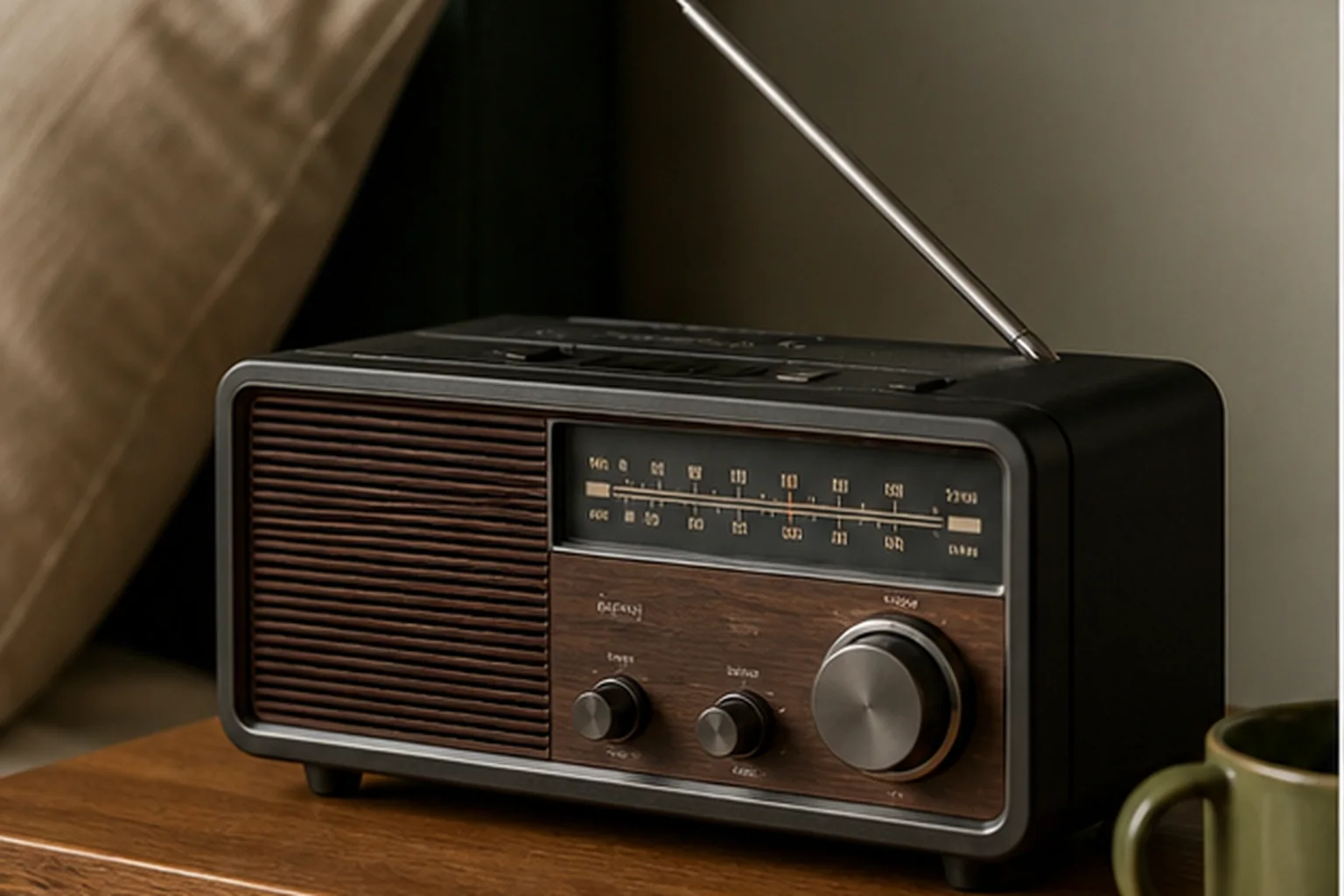
Choose a clock radio by the station you want to wake to, the alarm schedule, and what happens when power is lost. An AM/FM tuner, Bluetooth input, and backup battery answer different questions. Compare the exact alarm sources and power limits below before paying for extra audio features.
We may earn a commission when you buy through links on this page. As an Amazon Associate I earn from qualifying purchases.
Compare alarm sources, schedules and power
| Model | Wake source versus playback | Schedule | Power limit | Reason to compare | Seller |
|---|---|---|---|---|---|
| Sangean RCR-20 | AM, FM or buzzer. Bluetooth and AUX are listening inputs in the checked manual. | Two alarms; once, daily, weekdays or weekends. | The manual specifies a non-HWS buzzer on backup, not battery-powered radio. | Compare for scheduled AM/FM waking plus bedside audio. | Check Amazon listing |
| Emerson SmartSet ER100301 | FM or buzzer; Bluetooth listening is separate. | Two alarms; every day, weekdays or weekends. | Coin cell maintains time and alarm settings; audible outage operation is not established here. | Compare when FM and USB charging matter more than AM. | Check Amazon listing |
| Lumie Bodyclock Shine 300 | FM and selectable wake sounds alongside sunrise light. | Daily and weekly modes; check their different arming routines. | Do not select it on an unverified battery-alarm assumption. | Compare for light-led waking with optional FM, not as a direct RCR-20 replacement. | |
| Magnasonic EAAC601 | AM, FM or buzzer; AUX playback is not an alarm source. | Two alarms with documented repeat-day choices in the existing model guide. | Backup-sound sources conflict; do not choose it solely for outage reliance. | Compare when projected time and broadcast radio are both useful. | Check Amazon listing |
| Sangean RCR-5 | AM, FM or buzzer in the manufacturer-linked instructions; AUX is for listening. | Two alarms; once, daily, weekdays or weekends in the linked instructions. | Adapter operation; a sounding outage alarm is not established by this review. | Compare the white AM/FM model with a brightness dial and 10 station presets. | Check Amazon listing |
Model names, colors and power adapters must match the selected offer. A missing seller button is not a claim that a product has been discontinued.
Role-based product shortlist
Five model routes, without a universal winner
Decide which role fits, then compare the exact seller offer. The order below is not a numerical rating.
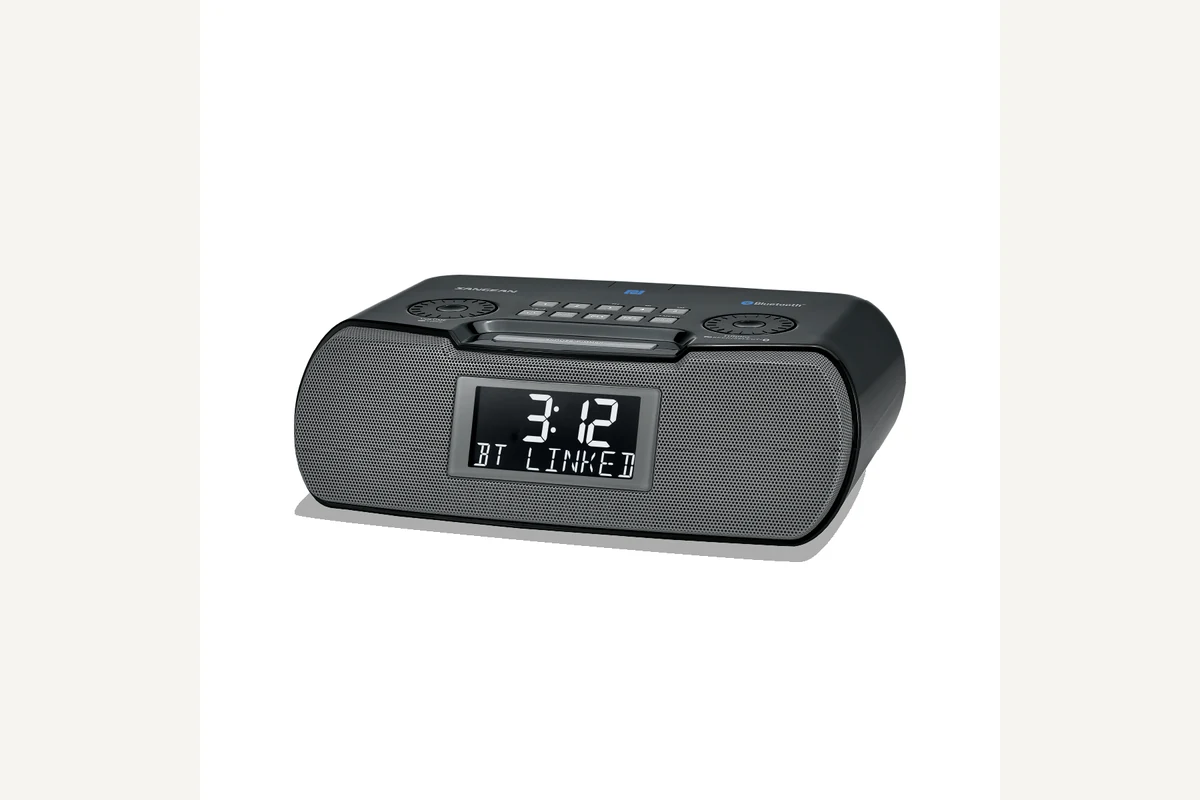
For AM/FM schedules and bedside listening
Sangean RCR-20
RCR-20 combines AM/FM-RDS with Bluetooth and AUX playback. Its manual names AM, FM and buzzer as the alarm choices; paired phone audio is not another verified scheduled source.
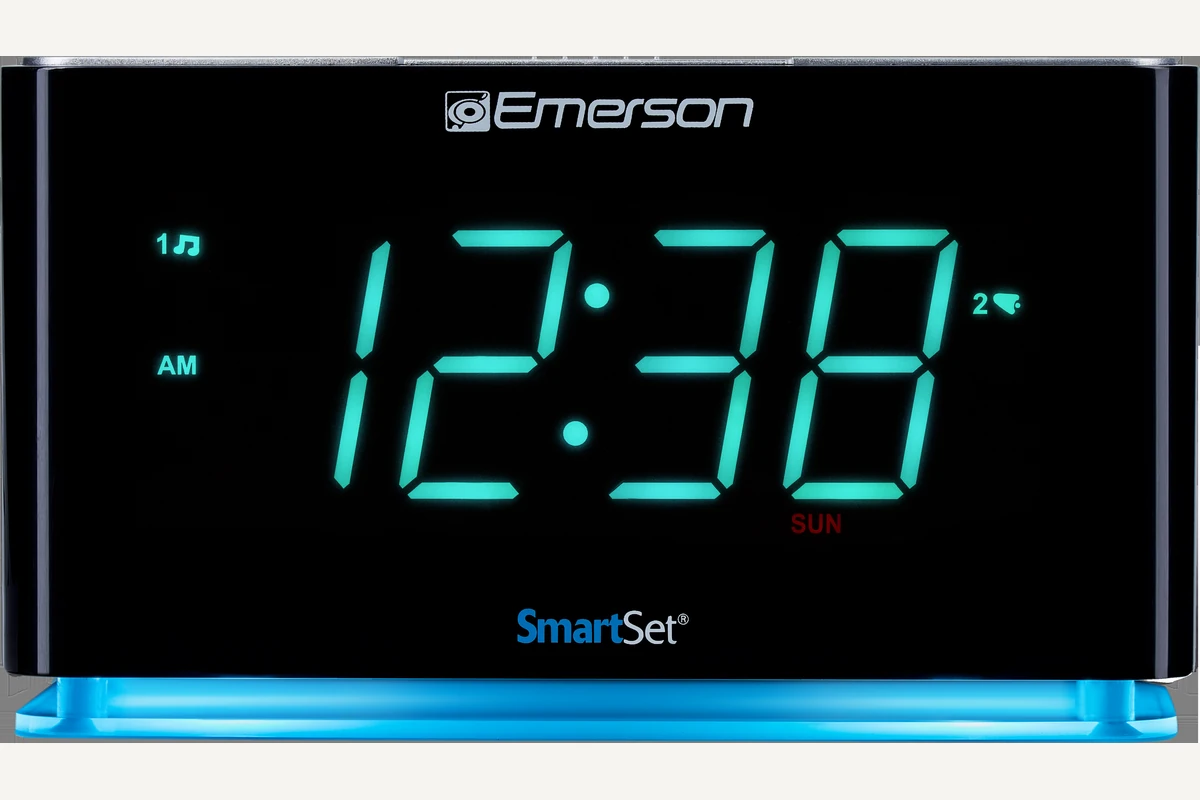
For FM waking with ordinary phone charging
Emerson SmartSet ER100301
ER100301 offers FM or buzzer wake, two alarms and day-pattern choices. Its USB output is specified at 2.1 A / 5 V; this is not a promise of modern fast charging.
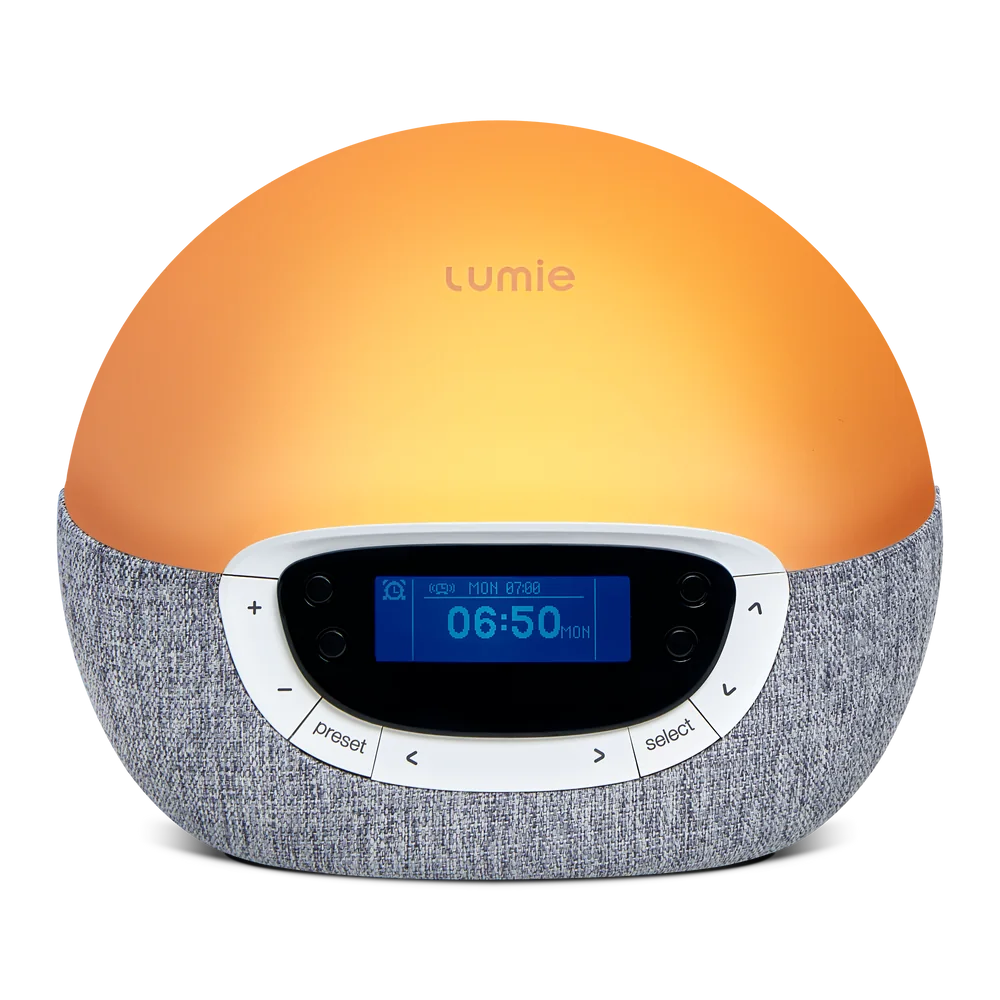
For sunrise light with optional FM
Lumie Bodyclock Shine 300
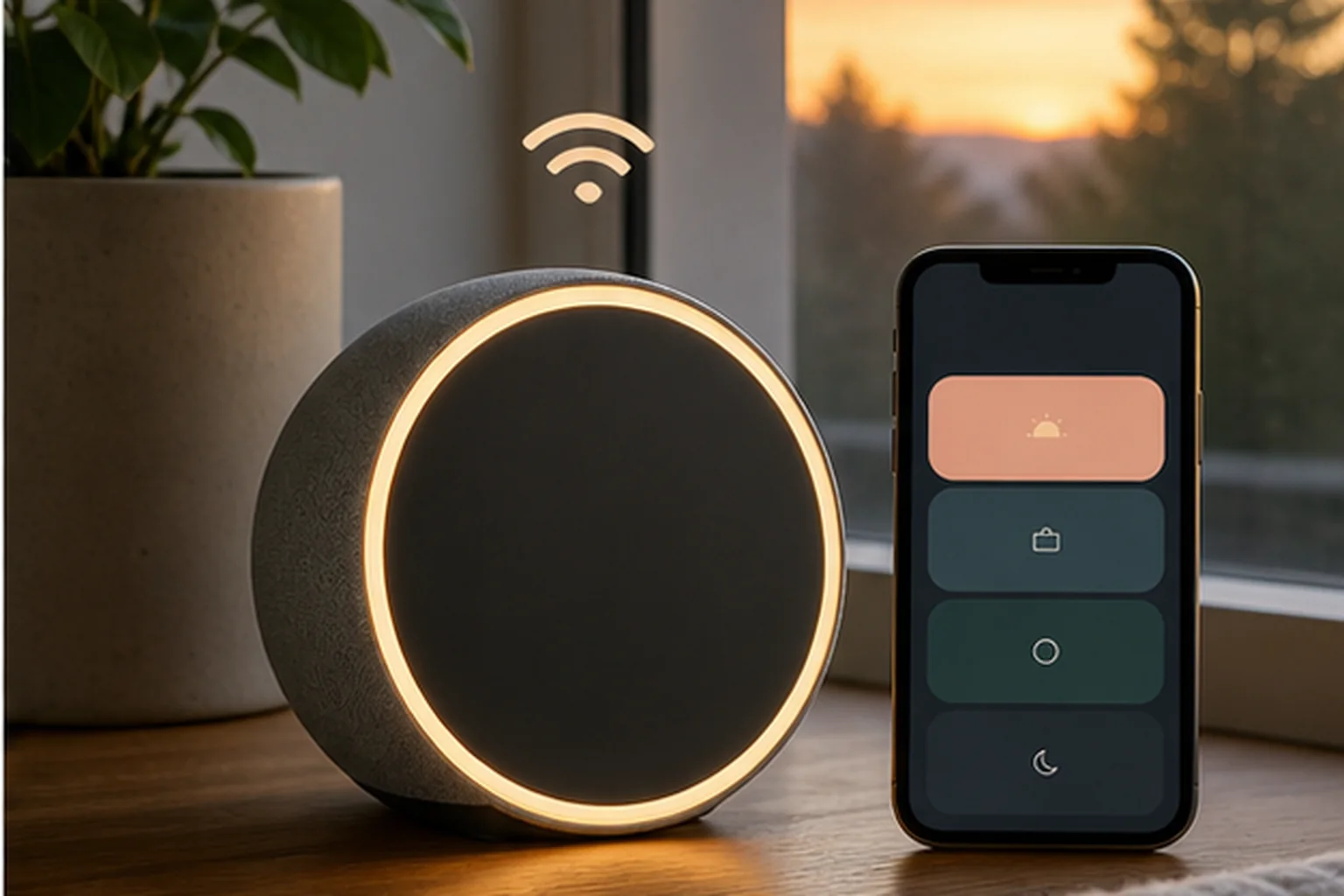
Shine 300 adds adjustable 15–90 minute light routines, FM and a daily/weekly schedule choice. Keep it in the comparison when gradual light is a requirement rather than paying for it solely to obtain a tuner.
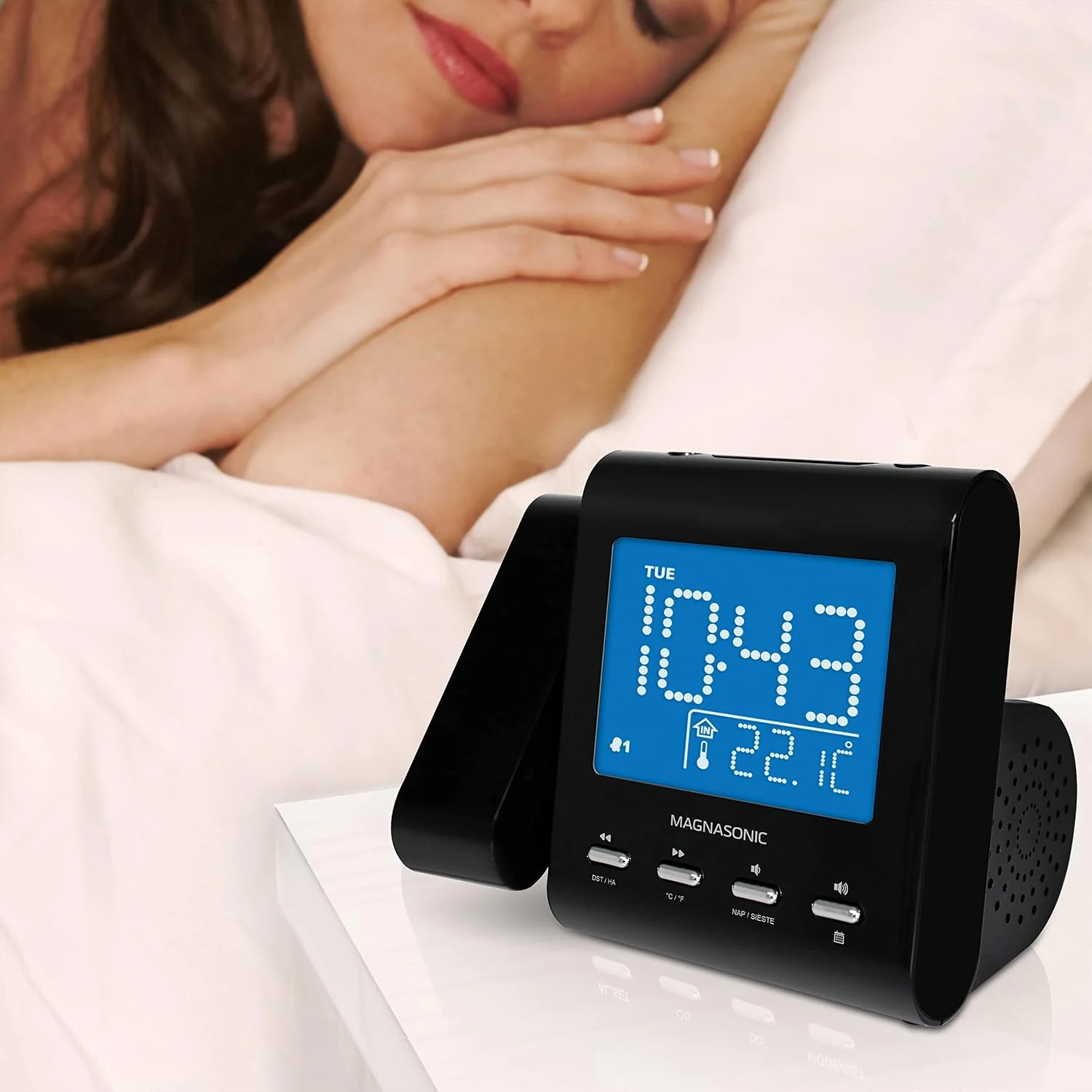
For radio waking and projected time
Magnasonic EAAC601
EAAC601 is the crossover option: AM/FM or buzzer waking and a projector. Its existing model guide distinguishes ordinary AUX listening from the alarm source and records repeat-day choices.
For AM/FM without the RCR-20 audio feature set
Sangean RCR-5
The white RCR-5 offers AM/FM, 10 presets, an AUX input and a brightness dial. The linked instructions describe two radio-or-buzzer alarms with once, daily, weekday and weekend choices.
Four checks that determine the choice
Confirm reception, the actual alarm menu, the repeat schedule and the required power state. Additional inputs or a large preset count do not compensate for a missing wake source.
A listening input is not automatically a wake source
Bluetooth or AUX can play phone audio without being selectable as a scheduled alarm. Read the alarm menu separately from the list of listening inputs.
For example, the RCR-20 instructions list AM, FM and buzzer in alarm setup. ER100301 similarly separates Bluetooth listening from FM or buzzer wake. Do not promise a Spotify or phone-audio alarm from those inputs alone.
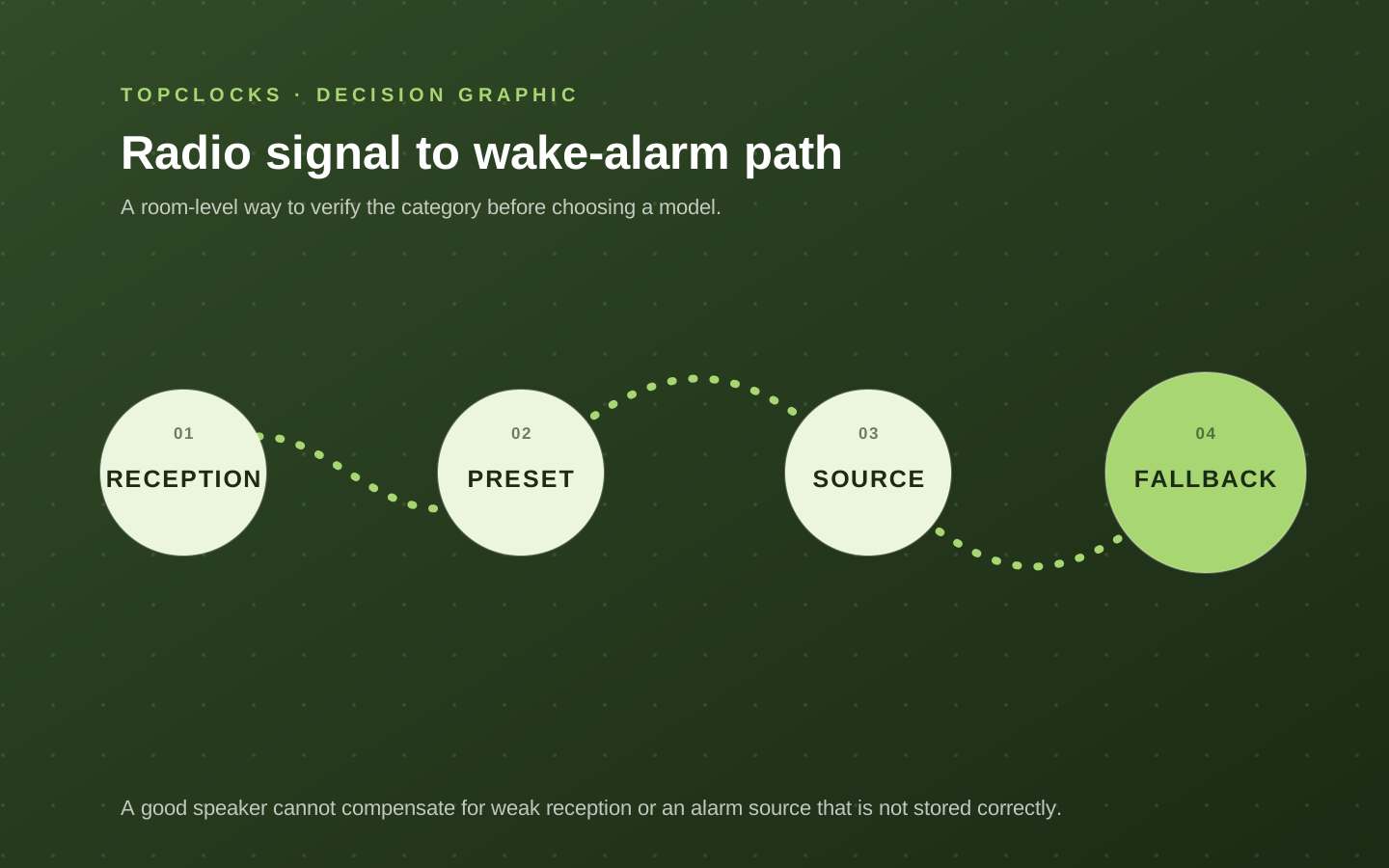
Choose the role before the extras
Compare RCR-20 for its broader listening functions, RCR-5 for an AM/FM-focused route, and Emerson when FM plus charging meets the job. Keep Lumie or Magnasonic in the comparison only when sunrise light or projected time is useful.
Preserve space for the controls, antenna and ventilation required by the exact unit. A product photo cannot establish reception or sound quality from your bedside position.
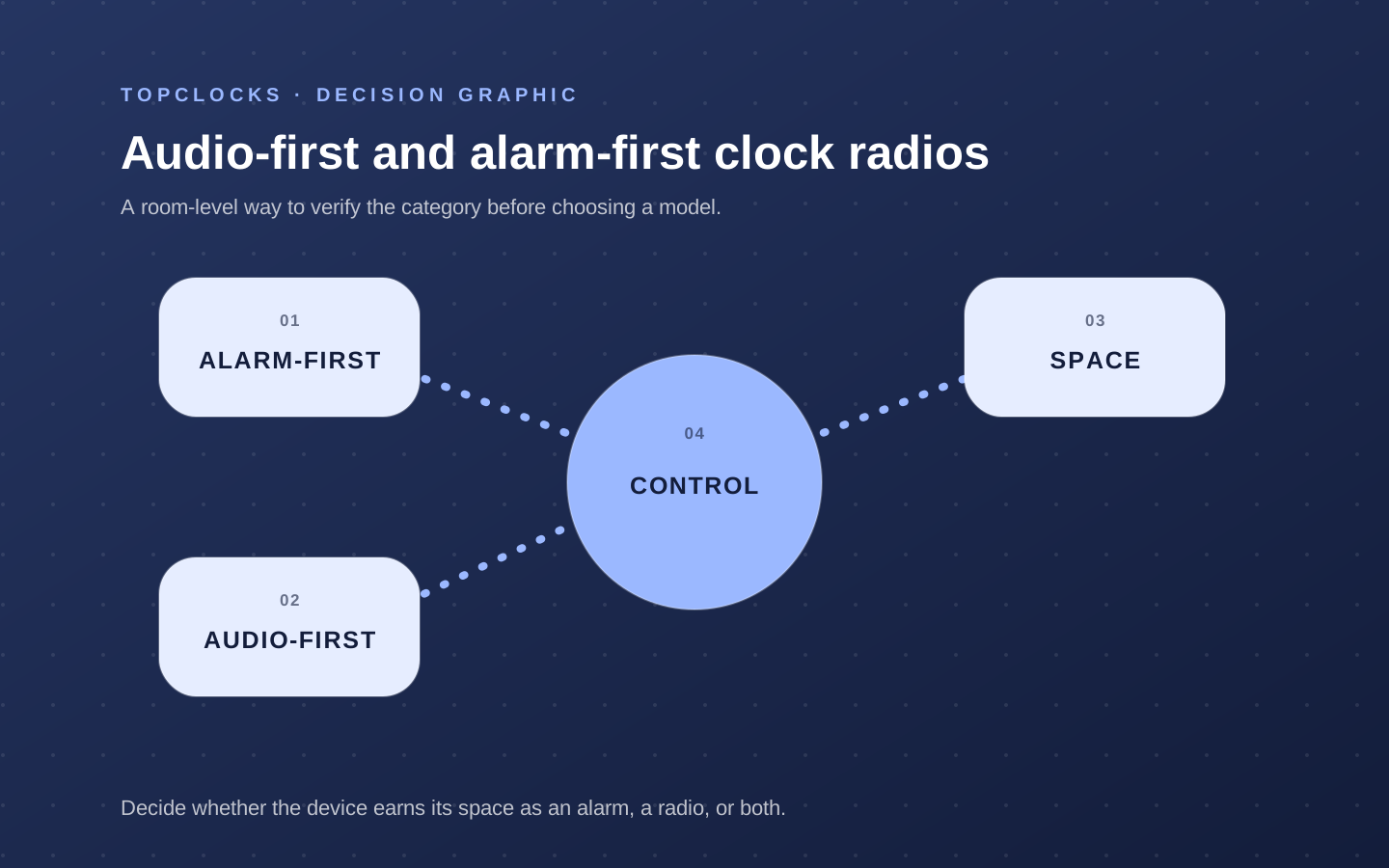
Three meanings of fallback must stay separate
A selectable buzzer, a backup buzzer during a power failure, and automatic detection of poor reception are different functions. None should be inferred from another.
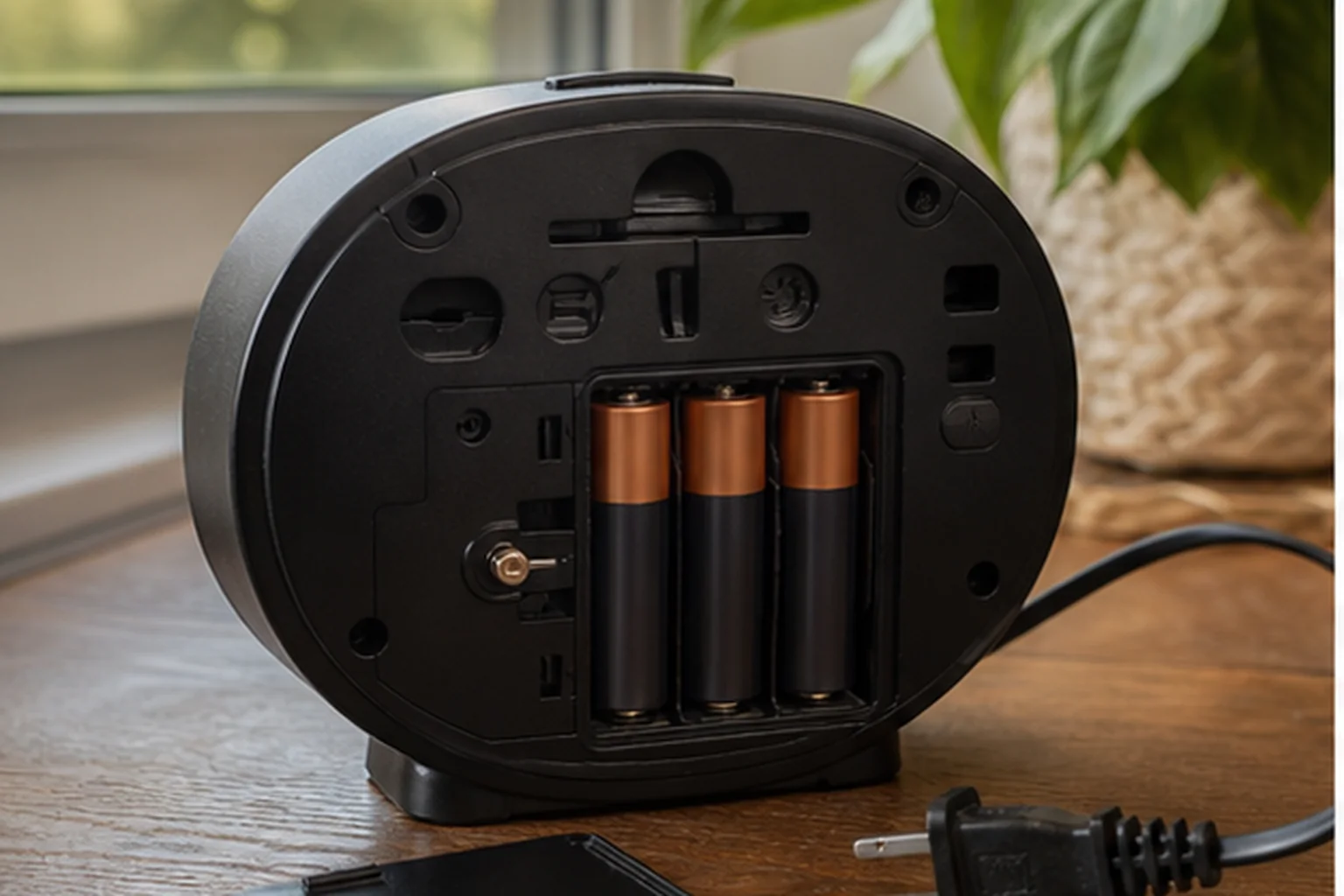
RCR-20's manual describes a buzzer replacing radio wake when AC is absent and backup batteries are installed. It does not establish a switch to that buzzer when an FM signal becomes weak. Emerson's settings-retention statement and the unresolved EAAC601 backup conflict must not be described as the same behavior.
Automatic time setting also needs its own check. The RCR-20 manual describes manual time or FM RDS CT, not WWVB reception; Magnasonic's preset SelfSet description is a different mechanism. Keep these distinctions separate from the power supplying the alarm.
Make one choice before opening a store
Select the row that supplies the band, wake source and schedule you need; then read its power limitation. Compare the exact seller offer only after those requirements are met.
For projected time, use the EAAC601 projection and lighting notes. For a light-led routine, use the Shine 300 daily and weekly explanation. These are separate viewing and light tasks, not extra proof of radio reliability.
Check the intended bedside setup
Check the intended setup while a missed alarm has no important consequence. Record the model, source, schedule and power state instead of giving the unit a pass for every possible use.
- At the actual bedside position, tune the intended station with the normal antenna and nearby electronics in use. Note noise or interruptions.
- Set a near-term alarm using the intended band, preset or frequency. Check its configured wake volume and repeat day; ordinary listening volume may be separate.
- Observe how stopping differs from disabling the next alarm. Verify the active indicator and tomorrow's schedule.
- For an outage requirement, follow the exact manual's power procedure during daytime. Record sound, clock memory, screen and any projection independently; restore power and recheck the setup.
This is a user setup check, not a TOPCLOCKS test or a guarantee of waking. Do not intentionally jam a broadcast, modify the antenna circuit or open the housing.
Decide what the result supports
Unverified behavior remains an open limitation. When reception is unsuitable, select an independently configured alarm source or another device; do not assume a radio can detect missing program audio. A successful trial applies to that unit and configuration, not every household.
Questions before buying a clock radio
Use the exact model and operating condition, not the number of features, to settle these choices.
Can a Bluetooth clock radio wake me to phone audio?
Only when the exact model documents Bluetooth as an alarm source. RCR-20 and ER100301 describe Bluetooth listening separately from their radio and buzzer alarms. Pairing a phone does not establish a scheduled wake function. Compare the documented wake menus.
Will a weak station automatically trigger a buzzer?
Not on the evidence used here. A selectable buzzer and a power-loss backup do not prove that a clock detects weak reception or silent program audio. Check reception and configure a separate alarm source when needed. Separate the three fallback functions.
What does RCR-20 do when mains power is lost?
Its manual describes a buzzer without Humane Waking System when AC is absent and backup batteries are fitted. That is not full battery-powered radio operation. Verify the matching manual and rehearse the intended setup; no runtime guarantee is made. Read the RCR-20 power limitation.
Which models offer repeat-day choices?
The RCR-20 and manufacturer-linked RCR-5 instructions describe once, daily, weekday and weekend settings. ER100301 lists every day, weekdays or weekends, while Shine 300 has daily and weekly modes. These options do not establish identical stop actions, independent speakers or battery behavior. Compare the model-specific schedules.
Does battery backup make every model an outage alarm?
No. ER100301 documents settings retention, while EAAC601 has a support/product conflict that remains open. RCR-20 has a more specific documented backup-buzzer state; none of these statements can be copied to the other models. Read what backup batteries power.
Should I choose a radio, sunrise or projection model?
Choose a conventional radio route when the broadcast and alarm controls are the main job. Compare Shine 300 when gradual light matters and EAAC601 when projected time is useful. Evaluate those extra functions separately from the radio wake path. Choose the role before the extras.
Evidence trail
Sources and what was checked
This is a documentation-based comparison, not a physical test of reception, speakers or wake-up reliability. The comparison uses current Sangean, Emerson and Lumie documents and carries forward the qualified Magnasonic model notes. The exact limits of the source checks are retained with each model.